
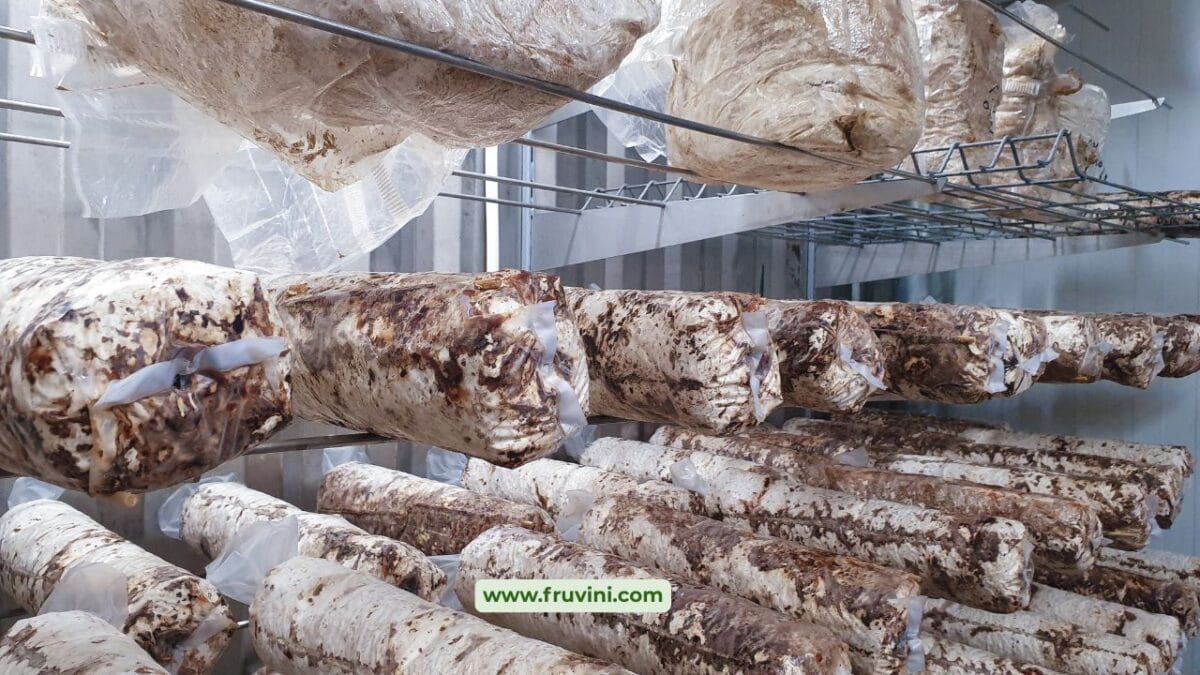
Why Controlled Environment Mushroom Farming is the Future
Controlled environment mushroom farming is rapidly becoming the preferred method for growers who want consistent production, higher yields, and better quality mushrooms. As demand for fresh, healthy, and chemical-free food continues to grow in India, traditional farming methods are often unable to deliver reliable results throughout the year.
If you’re new to this field, it’s helpful to first understand the basics of how to start mushroom farming at home before moving to advanced setups.
This is where controlled environment farming makes a difference. By managing key factors like temperature, humidity, airflow, and light, farmers can create ideal growing conditions regardless of external weather. This not only improves productivity but also reduces risks such as contamination, crop failure, and seasonal limitations.
Unlike basic home setups, controlled environment mushroom farming is designed for precision and scalability. Whether you are a beginner looking to upgrade your setup or an entrepreneur planning a commercial venture, this method gives you better control over both quality and output.
In this complete guide to controlled environment mushroom farming, you’ll learn how it works, the equipment required, setup costs, step-by-step process, and expert tips to build a reliable and profitable mushroom farming system.
What is Controlled Environment Mushroom Farming?
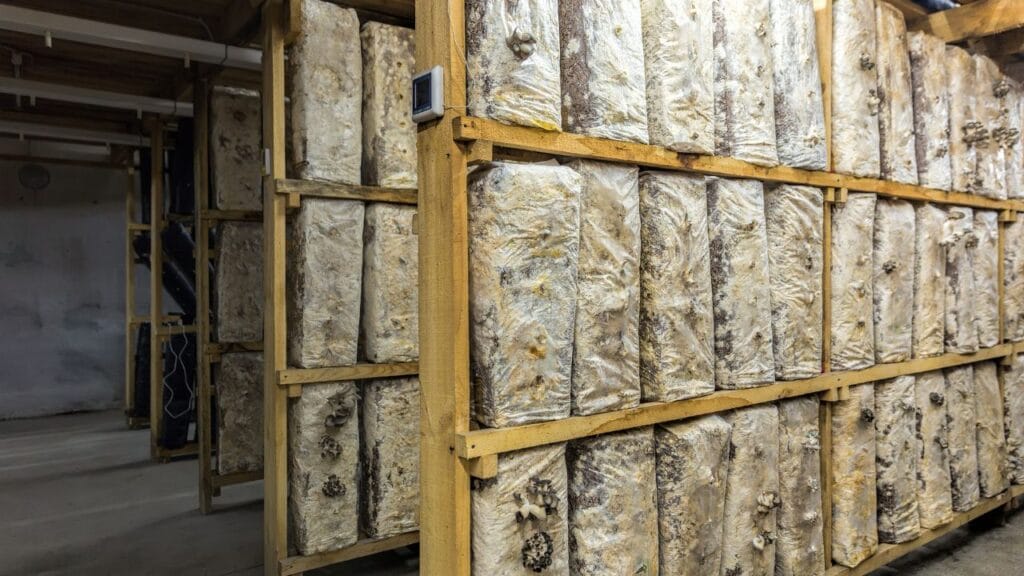
Controlled environment mushroom farming is a method of growing mushrooms indoors where key factors like temperature, humidity, airflow, and light are carefully managed to create ideal growing conditions. Unlike traditional farming, which depends on natural weather, this method gives you full control over the environment—resulting in more consistent and predictable production.
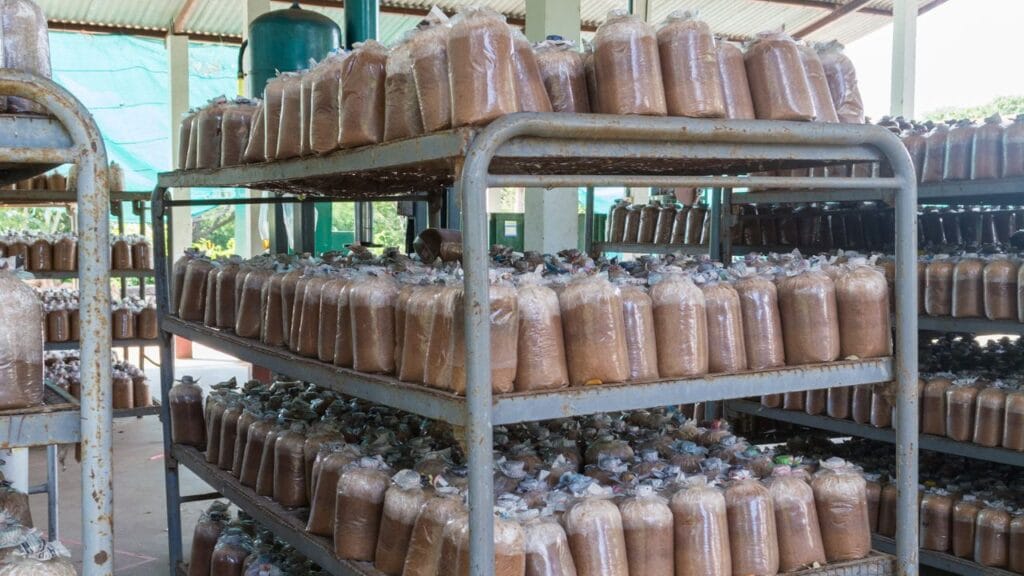
In this system, mushrooms are grown inside a closed or semi-closed space such as a room, shed, or specialized growing chamber. Equipment like humidifiers, exhaust fans, and temperature control systems are used to maintain the perfect conditions required for mushroom growth at every stage.
The process remains similar to basic cultivation—using substrate and spawn—but the difference lies in precision. From incubation to fruiting, every stage is optimized to maximize yield and reduce risks such as contamination or poor growth.
Controlled vs Traditional Mushroom Farming
| Factor | Traditional Farming | Controlled Environment Farming |
|---|---|---|
| Climate Dependence | High | Low |
| Production | Seasonal | Year-round |
| Yield Consistency | Variable | Stable |
| Risk | Higher | Lower |
| Scalability | Limited | High |
Why It Matters
Controlled environment mushroom farming allows growers to move from trial-and-error to a more scientific and reliable system. This is especially important if you want to scale your production or build a commercial mushroom farming business.
For a practical understanding of the growing process, you can refer to this detailed oyster mushroom cultivation guide designed for beginners.
Benefits of Controlled Environment Mushroom Farming
If you’re considering upgrading your setup, understanding the advantages of controlled environment mushroom farming will help you see why it’s becoming the preferred choice for serious growers. This method focuses on consistency, efficiency, and scalability—three things traditional farming often struggles with.
1. Year-Round Production
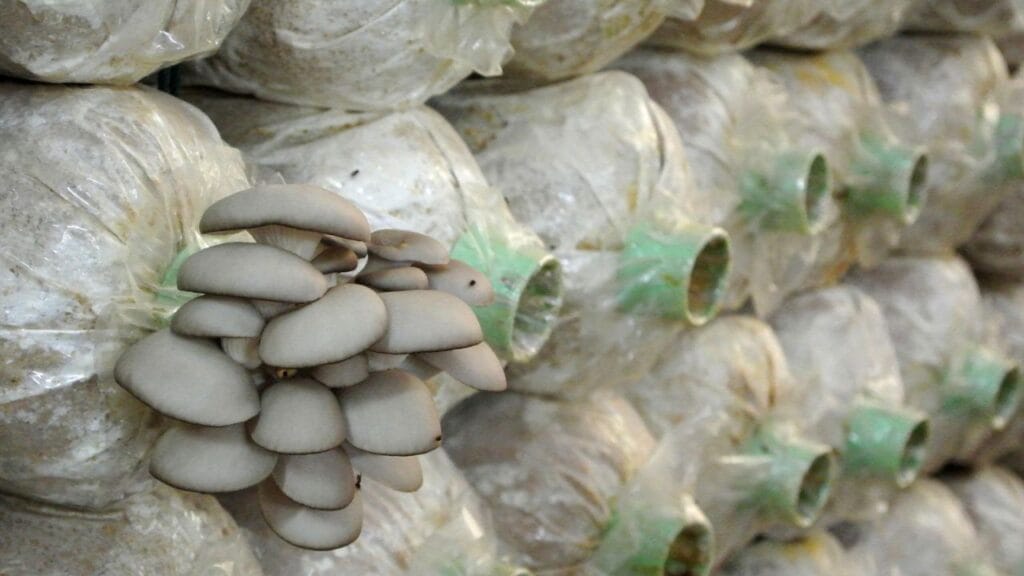
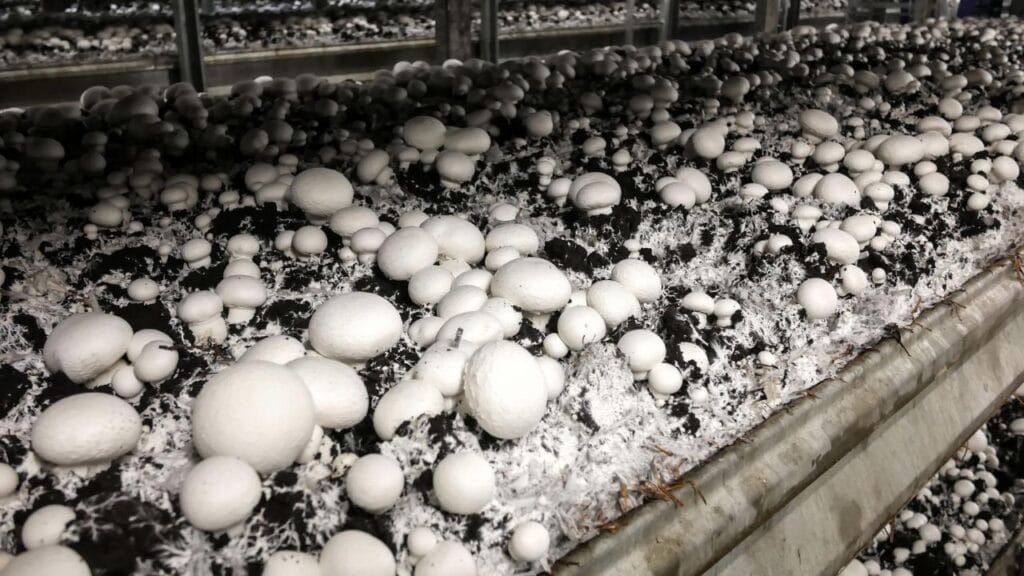
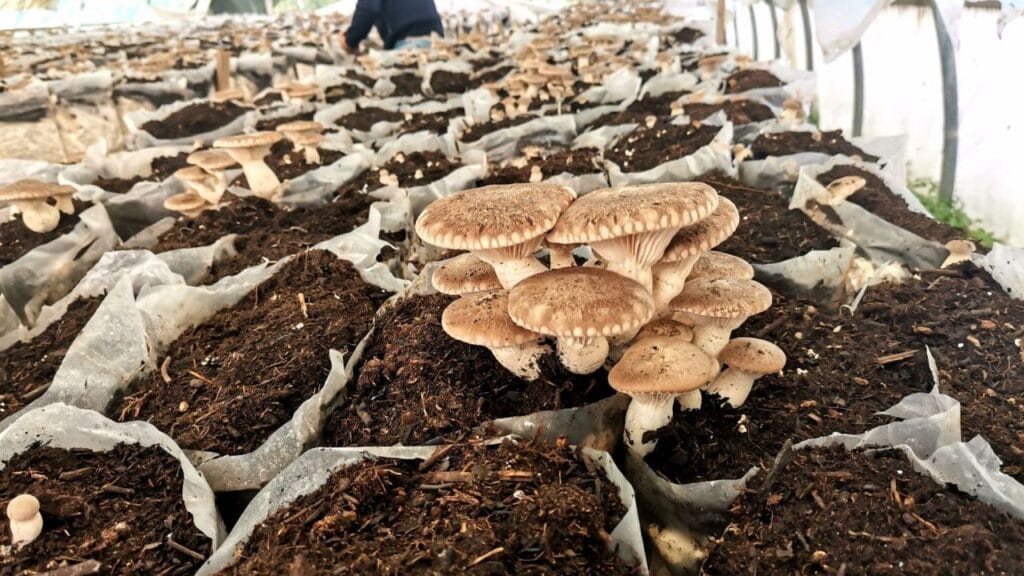
With controlled conditions, you are no longer dependent on seasons.
- Grow mushrooms in any weather
- Maintain continuous production cycles
- Ensure regular supply to the market
👉 Consistency = steady income
2. Higher Yield and Productivity

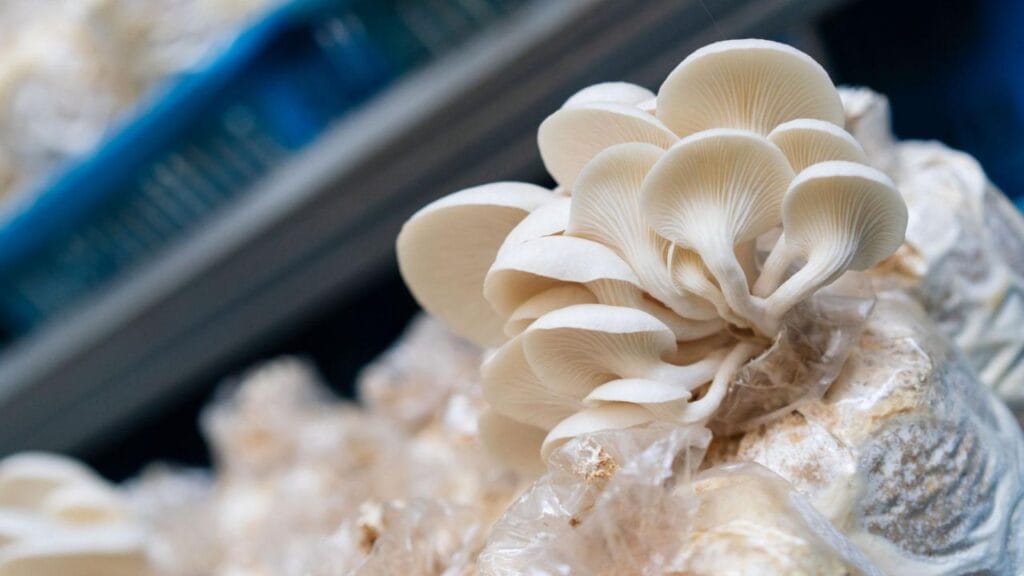
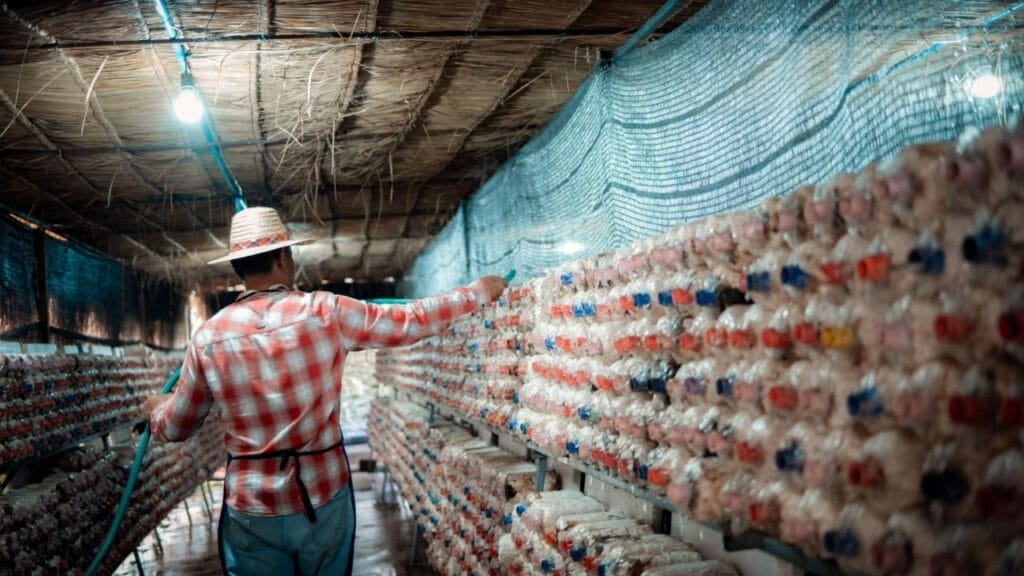
Optimized conditions lead to better growth.
- Faster mycelium development
- Larger and healthier mushrooms
- More output per cycle
👉 Better environment = better yield
3. Improved Quality of Mushrooms
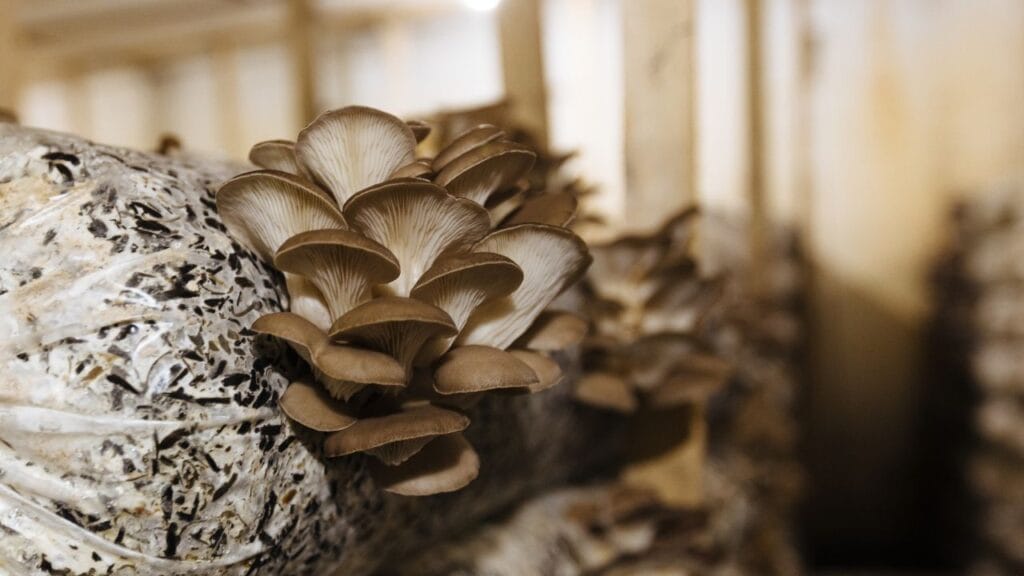
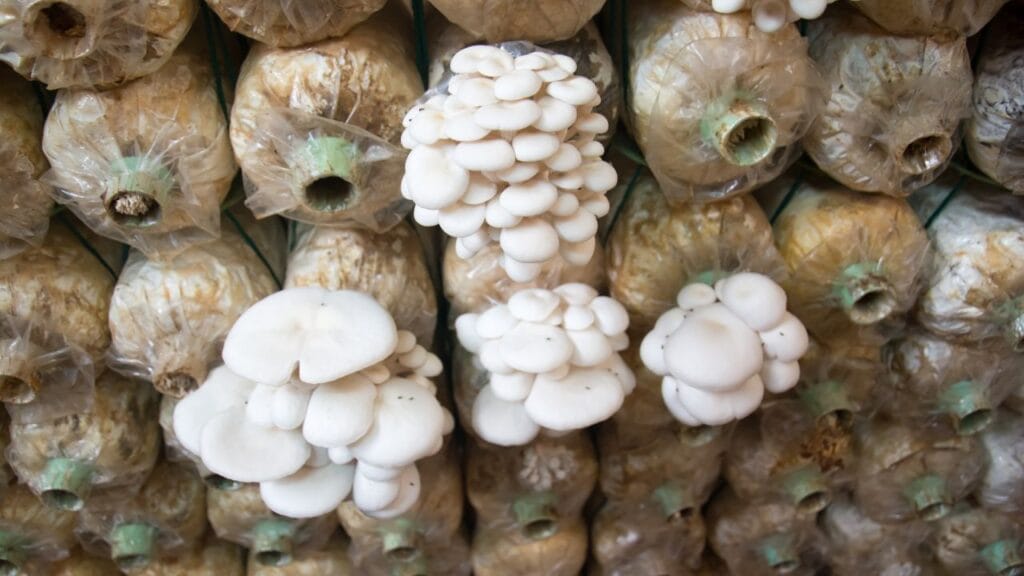
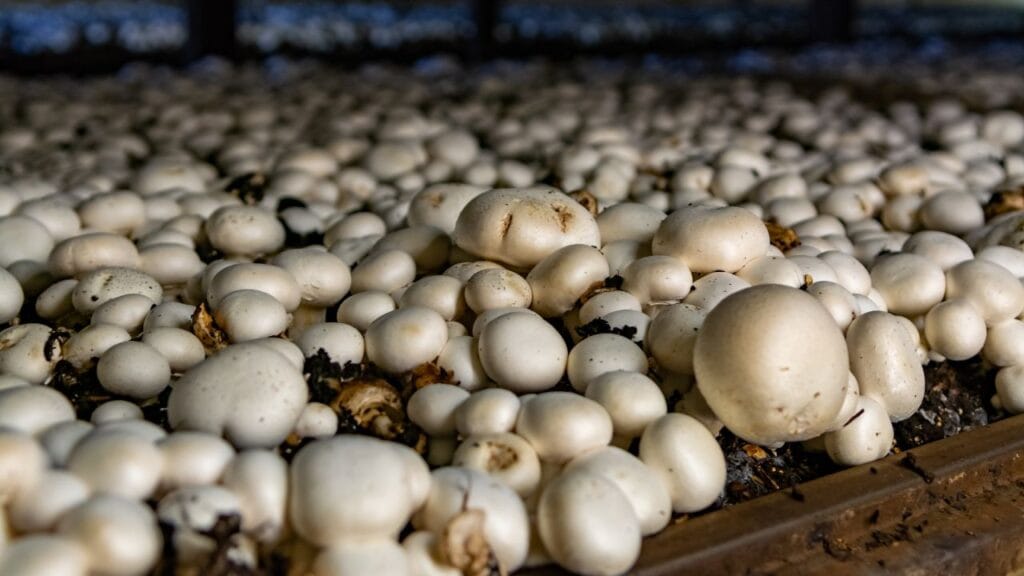
Quality matters for pricing and demand.
- Uniform size and shape
- Better texture and freshness
- Higher market value
👉 Better quality = better price
4. Reduced Risk of Contamination
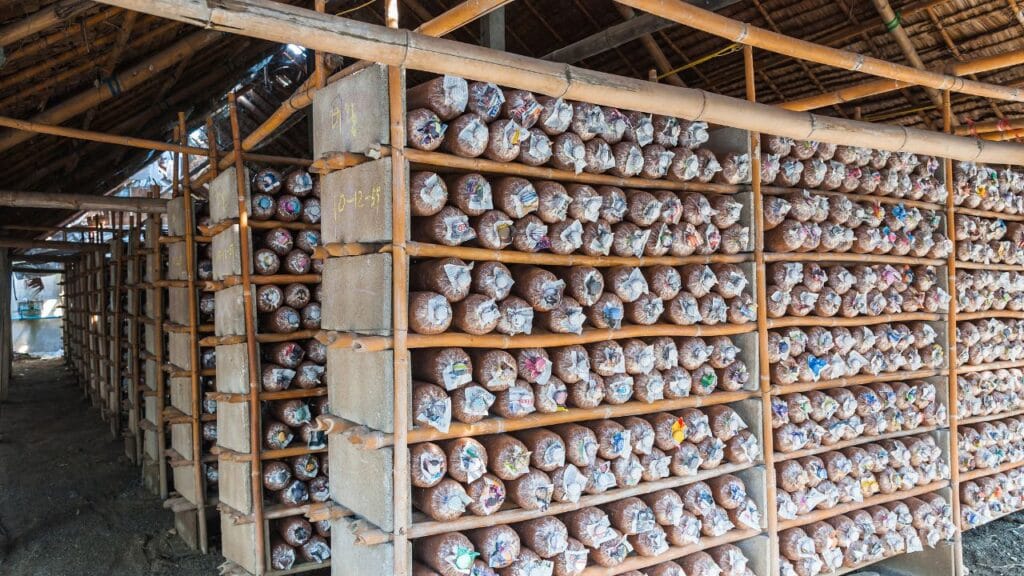
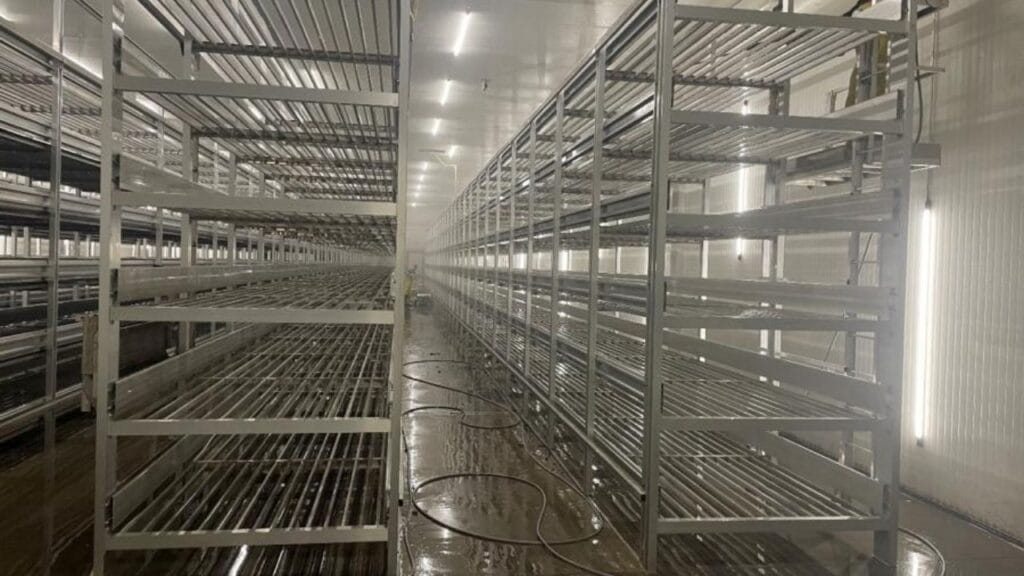
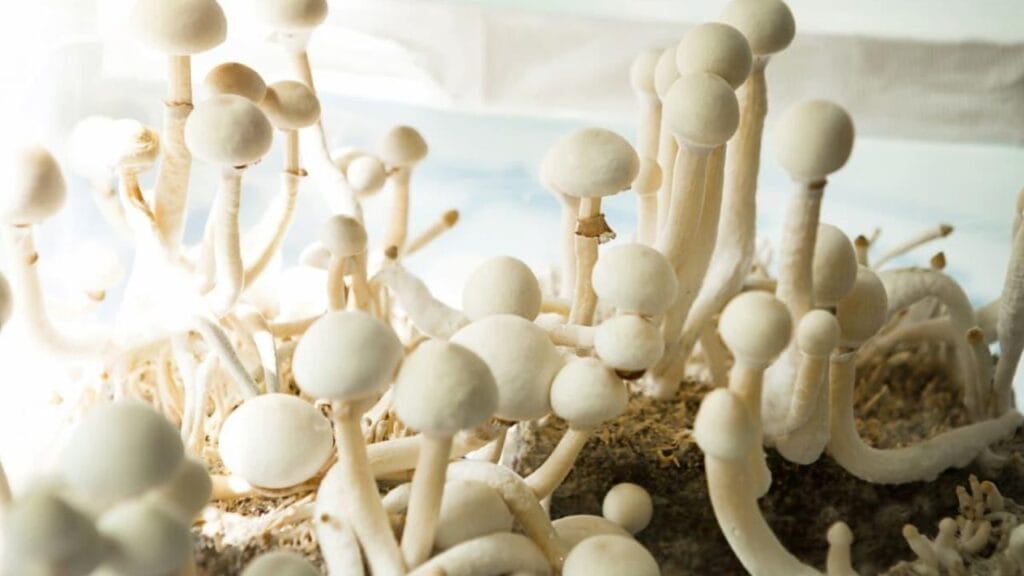
A controlled setup minimizes external risks.
- Less exposure to dust and bacteria
- Better hygiene control
- Lower chances of crop failure
👉 Controlled system = safer production
5. Scalability and Business Potential
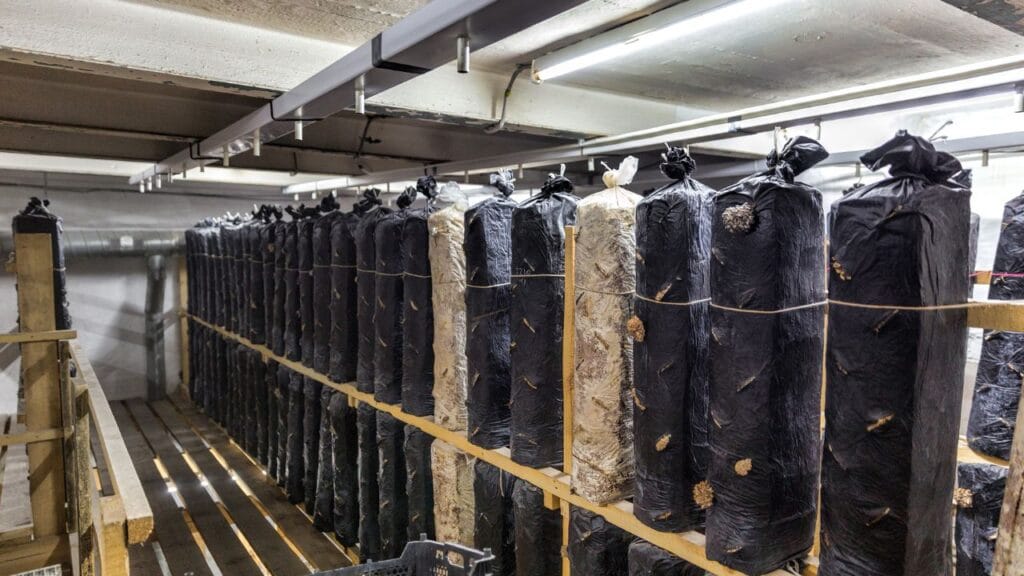
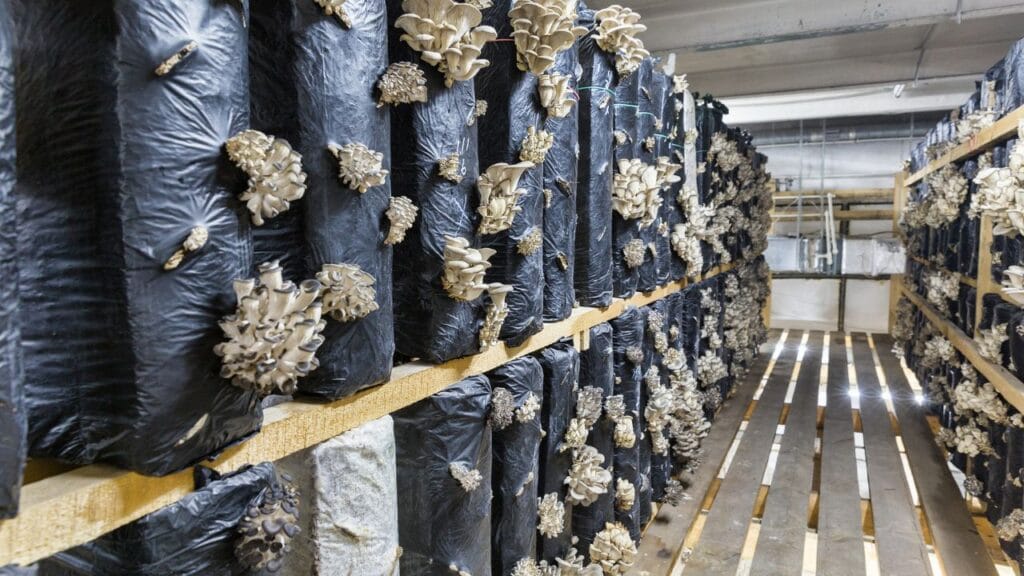
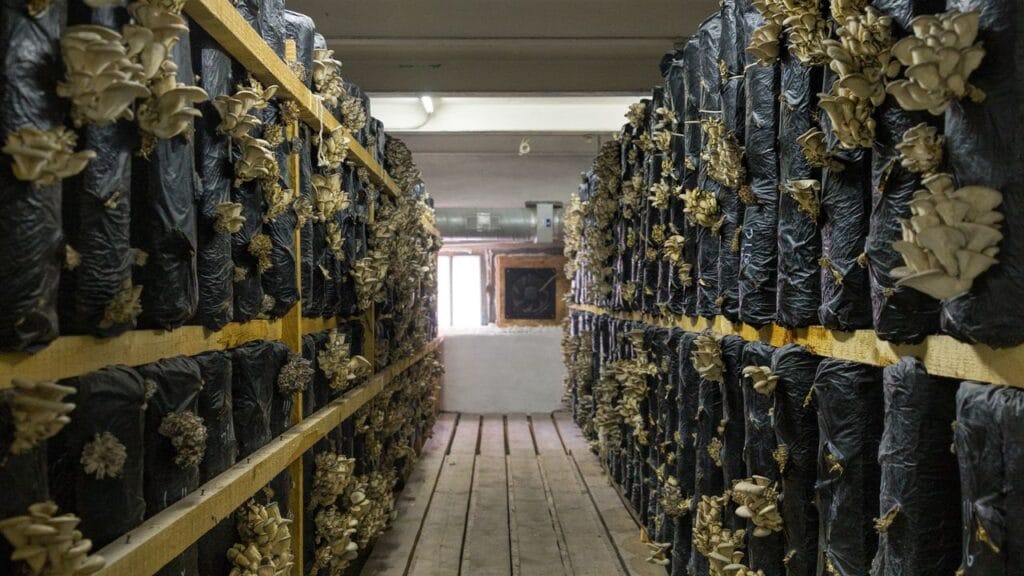
This method is ideal for long-term growth.
- Easy to expand production
- Suitable for commercial farming
- Supports consistent supply contracts
👉 Scale smartly with better control
Key Takeaway
Controlled environment mushroom farming is not just about growing mushrooms—it’s about building a reliable, scalable, and profitable system. If you want consistent results and long-term growth, this method gives you a clear advantage.
Types of Mushrooms Suitable for Controlled Farming
When it comes to controlled environment mushroom farming, not all mushroom varieties perform the same way. Choosing the right type is essential for achieving consistent yield, better quality, and higher profitability.
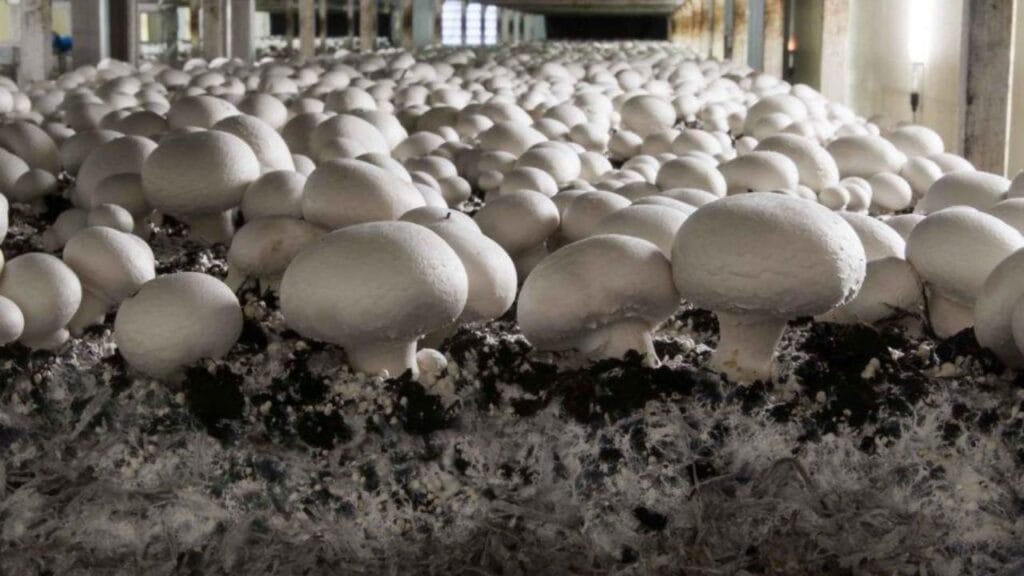
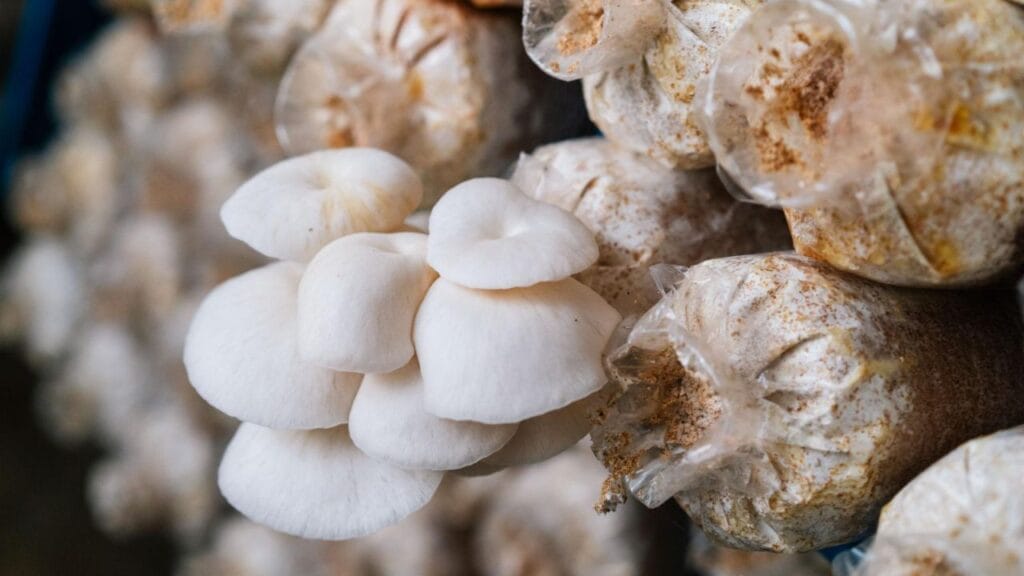

Here are the most suitable mushrooms for controlled farming:
Oyster Mushroom
Oyster mushrooms are one of the best choices for controlled environments.
- Easy to grow and highly adaptable
- Fast growth cycle (20–25 days)
- High yield with proper conditions
👉 Ideal for beginners and scaling production
If you want to explore more options, check out the most profitable mushrooms to grow in India based on demand and returns.
Button Mushroom
Button mushrooms require precise environmental control.
- High demand in Indian markets
- Requires compost-based substrate
- Needs strict temperature control
👉 Best suited for commercial farming setups
Shiitake Mushroom
Shiitake mushrooms are known for premium pricing.
- High market value
- Requires advanced setup
- Longer growth cycle
👉 Ideal for experienced growers targeting premium markets
Quick Comparison
| Mushroom Type | Difficulty | Growth Speed | Market Demand | Profit Potential |
|---|---|---|---|---|
| Oyster | Easy | Fast | High | High |
| Button | Medium | Moderate | Very High | High |
| Shiitake | Hard | Slow | Growing | Very High |
Key Takeaway
For beginners, oyster mushrooms are the safest and most efficient choice in a controlled environment. As you gain experience, you can expand into button or shiitake mushrooms for higher market value and scalability.
Key Components of a Controlled Environment Setup
To succeed in controlled environment mushroom farming, you need to create a system where all growth conditions are managed precisely. Each component plays a critical role in ensuring consistent yield and quality.
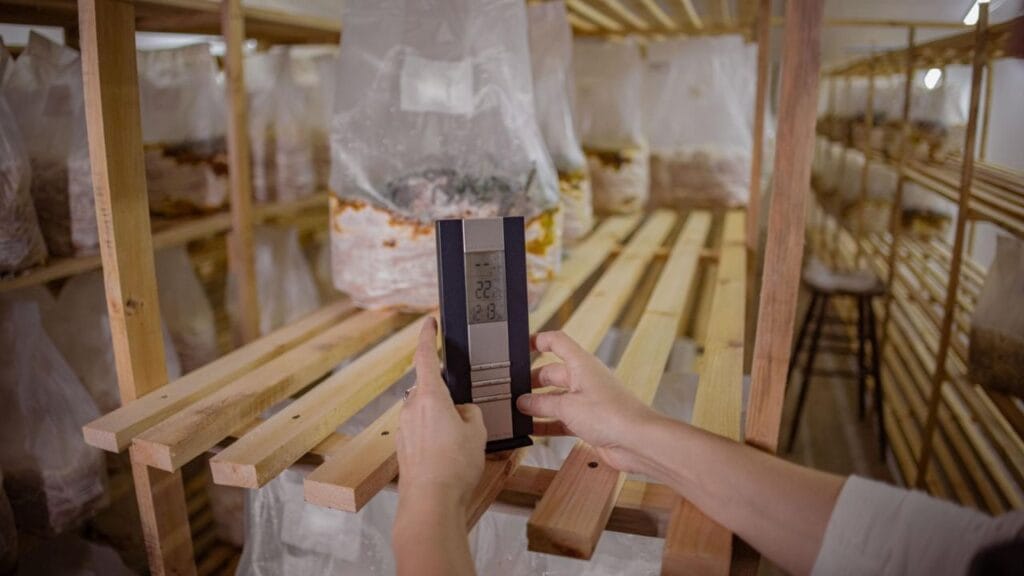
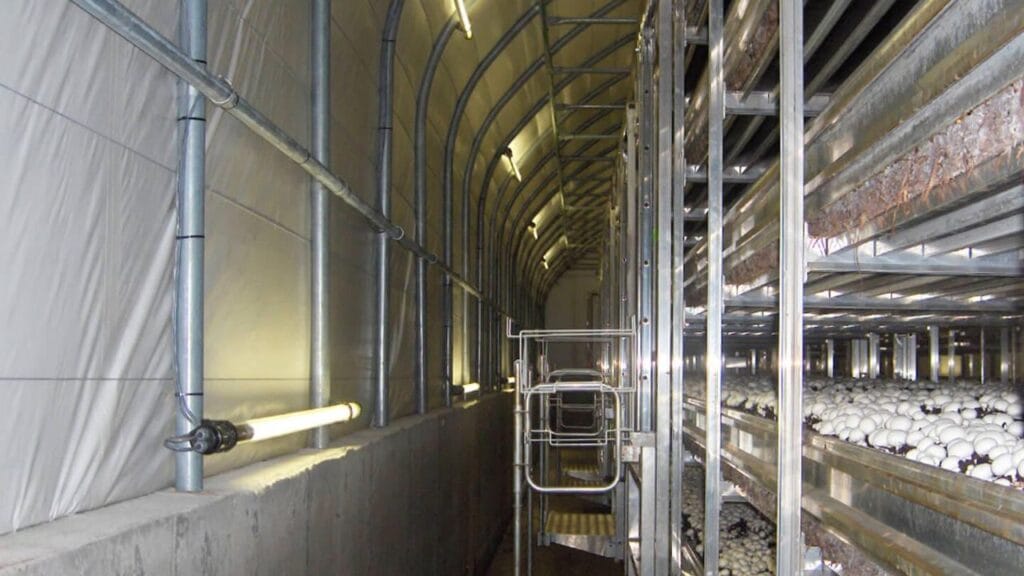
Temperature Control System
Temperature directly affects mushroom growth stages.
- Ideal range: 20–30°C (varies by mushroom type)
- Use air conditioners, coolers, or insulation
- Monitor regularly to avoid fluctuations
👉 Stable temperature = faster and healthier growth
Humidity Control System
Humidity is essential for proper fruiting.
- Maintain 70–90% humidity
- Use humidifiers or misting systems
- Avoid overwatering
👉 Proper humidity ensures better yield
Ventilation and Airflow System
Fresh air is critical for mushroom development.
- Install exhaust fans or ventilation systems
- Maintain proper air exchange
- Prevent buildup of CO₂
👉 Good airflow improves mushroom size and quality
Lighting Setup
Mushrooms don’t need strong light but require some exposure.
- Use indirect or low-intensity light
- Avoid direct sunlight
- Maintain a consistent light cycle
👉 Light helps trigger proper fruiting
Racks and Space Management
Efficient use of space increases productivity.
- Use vertical racks or shelves
- Organize bags for easy monitoring
- Maximize output per square foot
👉 Better layout = higher production
Key Takeaway
Controlled environment mushroom farming is all about managing these components together. When temperature, humidity, airflow, and space are optimized, you create a high-efficiency system for consistent production.
Equipment Required for Controlled Mushroom Farming
To build a successful controlled environment mushroom farming setup, you need the right equipment to manage temperature, humidity, airflow, and monitoring. The goal is not to buy everything expensive—but to create a reliable and efficient system.
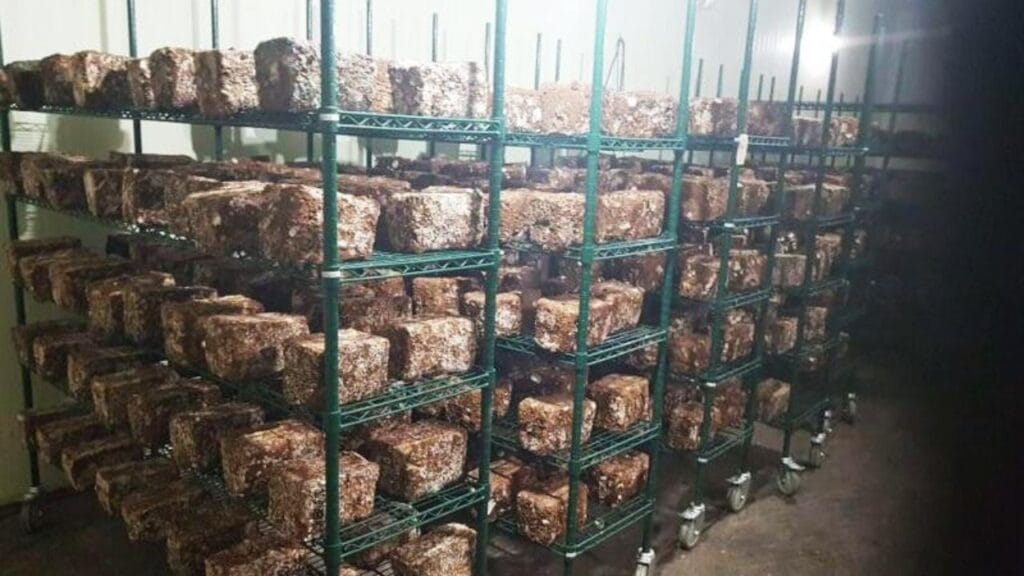
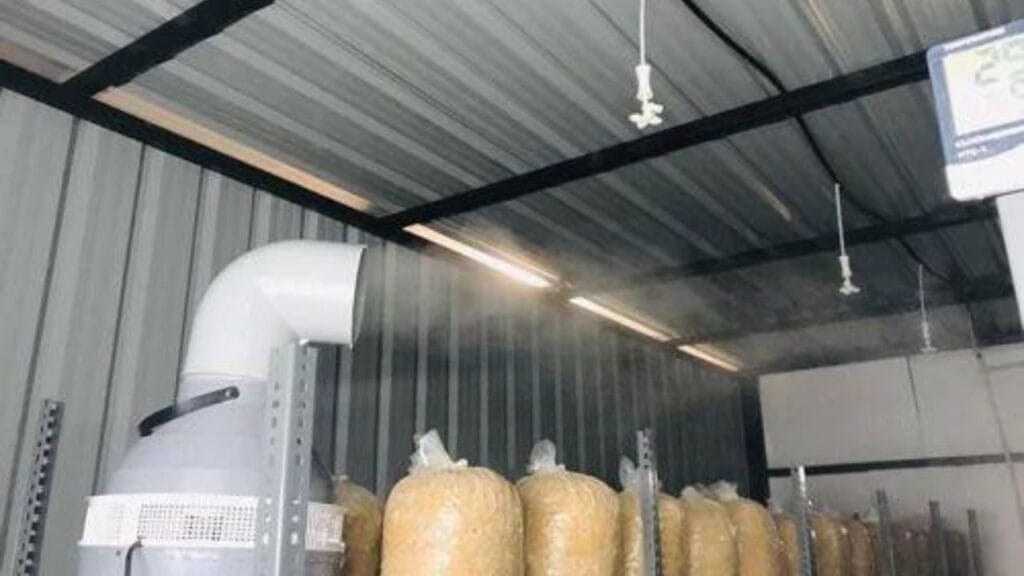
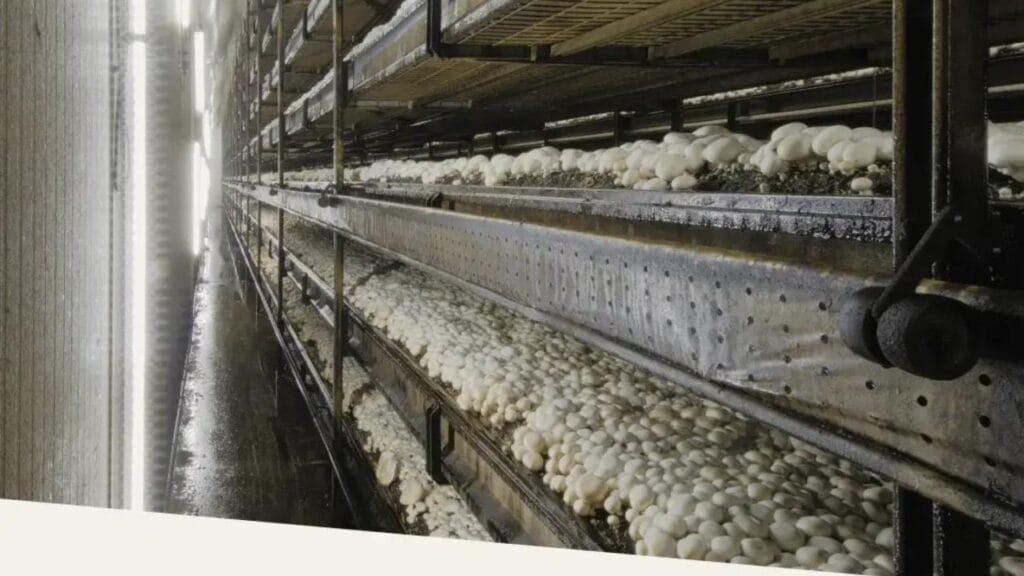
1. Humidifiers or Misting System
Used to maintain the required humidity levels.
- Keeps environment at 70–90% humidity
- Essential for fruiting stage
- Can be manual spray or automatic system
👉 Most important for consistent yield
2. Thermometer and Hygrometer
Helps you monitor environmental conditions.
- Tracks temperature and humidity
- Allows quick adjustments
- Affordable and easy to use
👉 What gets measured gets managed
3. Exhaust Fans and Ventilation System
Ensures proper airflow and oxygen supply.
- Removes excess CO₂
- Improves mushroom growth quality
- Prevents suffocation in closed spaces
👉 Essential for healthy mushrooms
4. Cooling or Temperature Control System
Maintains stable temperature.
- AC, coolers, or insulation methods
- Important for consistent production
- Required for certain mushroom types
👉 Stability is more important than exact number
5. Racks, Shelves, or Trays
Used for organizing your growing space.
- Enables vertical farming
- Increases production per area
- Makes monitoring easier
👉 Better structure = higher efficiency
6. Lighting (Optional but Useful)
Provides basic light for fruiting.
- Low-intensity lighting is enough
- Helps regulate growth cycles
- Avoid strong or direct light
Key Takeaway
You don’t need the most expensive setup to succeed in controlled environment mushroom farming. Start with essential equipment, understand how it works, and upgrade as you scale.
👉 Smart investment beats heavy investment
Step-by-Step Controlled Environment Mushroom Farming Process
In this controlled environment mushroom farming guide, following the right process is essential for achieving consistent yield and quality. While the environment is controlled, the growing steps remain similar—just more precise and optimized.

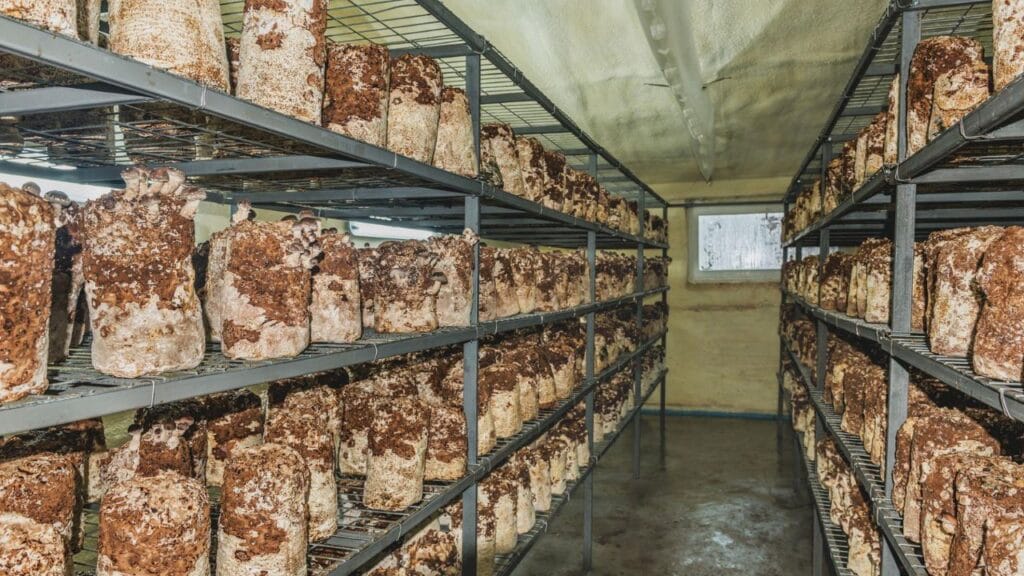
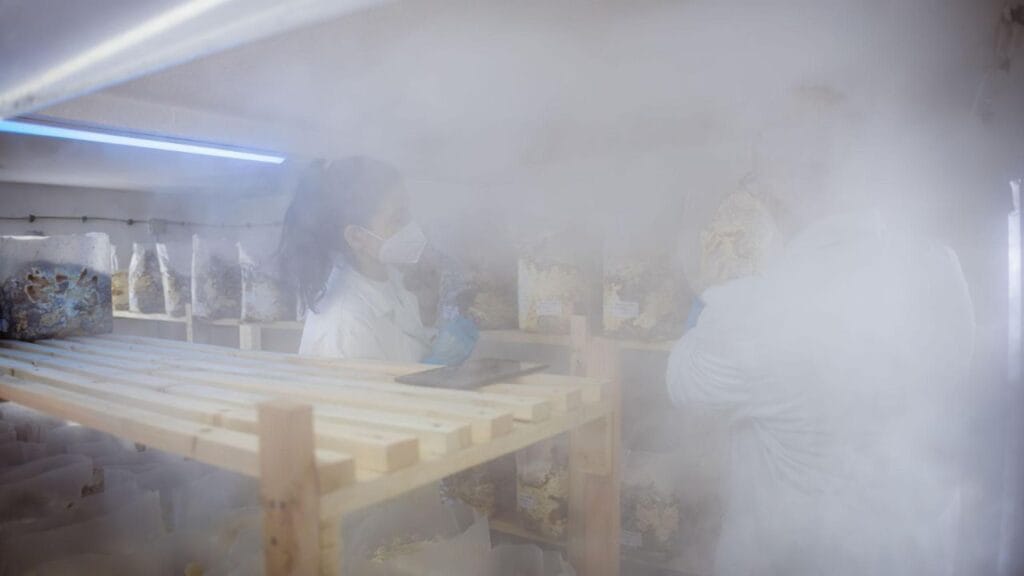
Step 1: Set Up the Growing Room
Start by preparing your growing space.
- Choose a closed or semi-closed room
- Install racks, fans, and humidifiers
- Ensure proper insulation and cleanliness
👉 A well-prepared room sets the foundation
Step 2: Prepare the Substrate
The substrate provides nutrients for mushrooms.
- Use straw, sawdust, or compost
- Clean and pasteurize properly
- Remove excess water before use
Step 3: Inoculation (Adding Spawn)
Introduce spawn into the substrate.
- Mix or layer spawn evenly
- Fill into bags or trays
- Maintain strict hygiene
👉 This is where growth begins
Step 4: Incubation Stage
Allow mycelium to spread through the substrate.
- Keep in a dark, controlled space
- Maintain stable temperature
- Duration: 10–15 days (approx.)
👉 Bags turn white when fully colonized
Step 5: Fruiting Stage
Mushrooms start to grow in this stage.
- Increase humidity and airflow
- Provide indirect light
- Maintain stable conditions
👉 Small pinheads develop into mushrooms
Step 6: Harvesting
Harvest mushrooms at the right time.
- Pick when caps are fully open
- Twist gently or cut cleanly
- Expect multiple flushes per cycle
Key Takeaway
Controlled environment mushroom farming is about precision and consistency. When each step is done correctly under controlled conditions, you get higher yield, better quality, and more predictable results.
Cost of Controlled Environment Mushroom Farming in India
Understanding the investment required is essential before starting controlled environment mushroom farming. While this method offers better yield and consistency, it also involves higher initial setup costs compared to basic farming.
To get a deeper understanding of expenses and returns, you can read this detailed guide on mushroom farming cost & profit in India.
Let’s break it down clearly:
1. Small-Scale Controlled Setup (Beginner Level)
Ideal for beginners testing controlled farming.
Estimated Cost: ₹20,000 – ₹50,000
Includes:
- Basic racks and growing space
- Humidifier or manual misting setup
- Thermometer and hygrometer
- Basic ventilation system
👉 Good starting point with manageable investment
2. Semi-Automated Setup (Medium Scale)
Suitable for consistent income generation.
Estimated Cost: ₹80,000 – ₹2,00,000
Includes:
- Advanced humidity control system
- Exhaust fans and airflow setup
- Improved space management (multi-layer racks)
- Better monitoring equipment
👉 Balanced investment with higher production
3. Fully Controlled Commercial Setup
For large-scale production and business expansion.
Estimated Cost: ₹3 lakh and above
Includes:
- Air conditioning and full climate control
- Automated humidity and ventilation systems
- Professional racks and infrastructure
- Continuous production setup
👉 High investment, but strong long-term returns
Key Cost Factors
- Size of setup
- Level of automation
- Type of mushroom
- Location and climate
- Electricity and maintenance
Reality Check
Controlled environment farming requires higher upfront investment—but it offers:
- Better yield
- Reduced risk
- Year-round production
👉 Think of it as a long-term investment, not a quick expense
Key Takeaway
Start with a setup that matches your budget and experience. You don’t need a fully automated farm on day one—start small, learn, and scale smartly.
Yield and Profit Potential
When evaluating controlled environment mushroom farming, the biggest advantage is not just higher yield—but consistent and predictable income. Unlike traditional methods, controlled setups allow you to optimize every cycle for better results.
1. Higher Yield Compared to Traditional Farming
Controlled conditions improve productivity significantly.
- 1 kg spawn → 2.5–4 kg mushrooms (higher efficiency)
- Better growth due to stable environment
- Reduced losses from contamination
👉 Optimized setup = maximum output
2. Year-Round Production Advantage
You can grow mushrooms throughout the year.
- No dependency on seasons
- Continuous production cycles
- Regular supply to customers
👉 Consistency leads to stable income
3. Profit Example (Semi-Controlled Setup)
- Spawn used: 20 kg
- Expected yield: 50–70 kg mushrooms
- Selling price: ₹150/kg
Revenue: ₹7,500 – ₹10,500 per cycle
Profit: ₹3,000 – ₹6,000 per cycle (approx.)
👉 Profit increases with scale and efficiency
4. Factors That Affect Profit
- Quality of spawn
- Accuracy of temperature and humidity control
- Energy (electricity) cost
- Selling strategy (direct vs middlemen)
👉 Efficiency is the biggest profit driver
5. Long-Term Profit Advantage
- Lower risk of crop failure
- Consistent production cycles
- Ability to scale easily
- Better pricing due to quality
👉 Controlled farming = sustainable income model
Key Takeaway
Controlled environment mushroom farming is not about quick profits—it’s about building a reliable, scalable, and high-efficiency system. With proper management, it can generate consistent income throughout the year.
Common Challenges and How to Overcome Them
While controlled environment mushroom farming offers many advantages, it also comes with its own set of challenges. The key is not to avoid these challenges—but to understand and manage them effectively.
1. High Initial Investment
Challenge: Setup costs can be higher than traditional farming
Solution:
- Start with a small or semi-controlled setup
- Invest gradually as you gain experience
- Focus on essential equipment first
👉 Smart investment reduces financial risk
2. Electricity and Power Dependency
Challenge: Continuous power is needed for temperature and humidity control
Solution:
- Use energy-efficient equipment
- Plan backup power (inverter or generator)
- Optimize usage to reduce cost
👉 Power management is crucial for stability
3. Equipment Maintenance
Challenge: Equipment needs regular upkeep
Solution:
- Clean and service equipment regularly
- Monitor performance daily
- Replace faulty components quickly
👉 Well-maintained systems prevent failure
4. Technical Knowledge Requirement
Challenge: Requires understanding of environmental control
Solution:
- Start with basic knowledge and simple setups
- Learn from guides and practical experience
- Improve gradually with each cycle
👉 Experience builds confidence
5. Risk of System Failure
Challenge: Equipment failure can affect production
Solution:
- Monitor systems regularly
- Keep backup options ready
- Avoid overdependence on automation initially
👉 Backup planning reduces risk
Key Takeaway
Challenges in controlled environment mushroom farming are manageable if you plan properly. Success comes from smart investment, regular monitoring, and continuous learning.
Many of these issues are explained in detail in this guide on common mistakes in mushroom farming and how to avoid them.
Tips for Success in Controlled Environment Farming
If you want to get the best results from controlled environment mushroom farming, focus on consistency, monitoring, and smart decision-making. Small improvements in your process can significantly increase yield and profit.
1. Monitor Conditions Daily
Regular monitoring is essential for maintaining stability.
- Check temperature and humidity daily
- Adjust systems when needed
- Identify issues early
👉 Early action prevents major losses
2. Maintain Consistent Environment
Consistency is more important than perfection.
- Avoid sudden changes in temperature or humidity
- Maintain steady airflow
- Keep conditions stable across all stages
👉 Stable environment = predictable results
3. Use High-Quality Inputs
Better inputs lead to better output.
- Use fresh and reliable mushroom spawn
- Prepare substrate properly
- Avoid contaminated materials
👉 Quality inputs improve yield and reduce risk
4. Plan Production Cycles Smartly
Consistency in production ensures steady income.
- Start new batches regularly
- Avoid gaps between cycles
- Maintain continuous supply
👉 Continuous production = continuous income
5. Optimize Energy Usage
Energy costs can impact your profit.
- Use energy-efficient equipment
- Optimize usage of AC, fans, and humidifiers
- Monitor electricity consumption
👉 Smart energy use improves margins
6. Start Small and Scale Gradually
- Begin with a manageable setup
- Learn from each cycle
- Expand only after consistent results
👉 Scaling without experience increases risk
Key Takeaway
Success in controlled environment mushroom farming comes from discipline, consistency, and continuous improvement. Focus on the process, and results will follow.
Controlled vs Traditional Mushroom Farming (Comparison)
When choosing a method, understanding the difference between traditional methods and controlled environment mushroom farming is essential. Each approach has its own advantages, but the right choice depends on your goals, budget, and level of commitment.
Visual Comparison
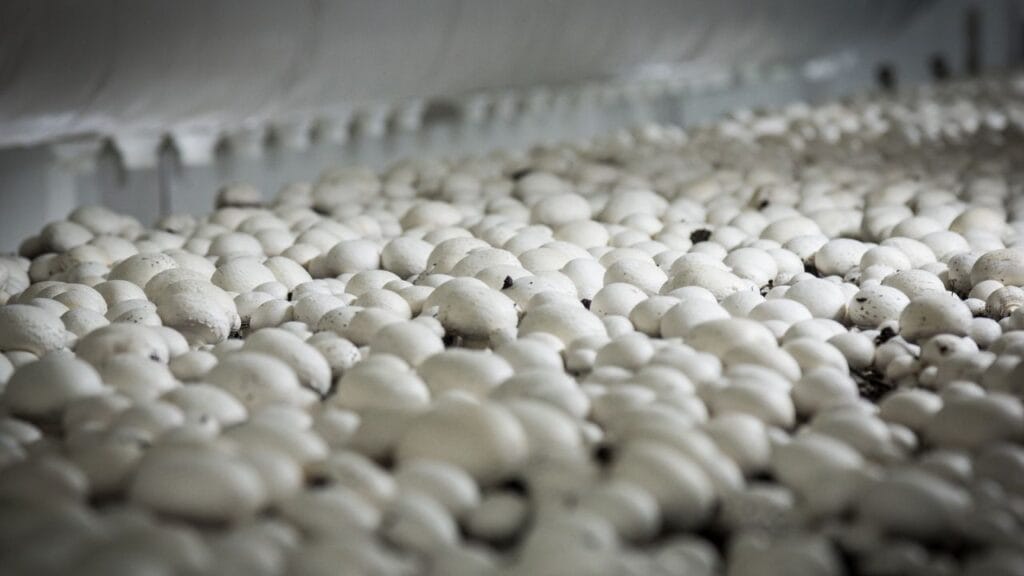
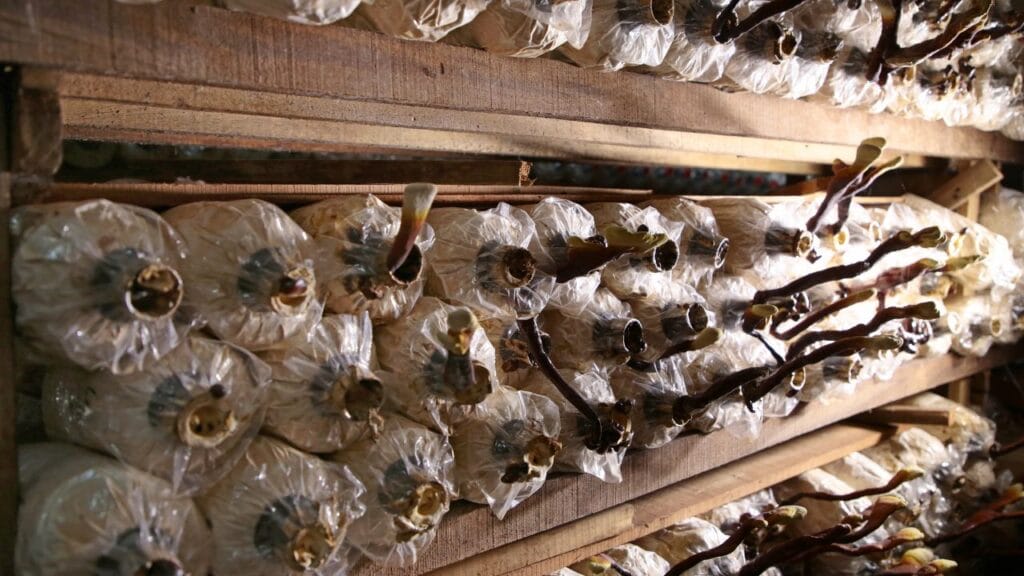
Detailed Comparison Table
| Factor | Traditional Farming | Controlled Environment Farming |
|---|---|---|
| Climate Dependence | High (seasonal) | Low (controlled conditions) |
| Production | Seasonal | Year-round |
| Yield | Variable | Consistent and higher |
| Risk | Higher (weather, contamination) | Lower (controlled setup) |
| Investment | Low | Medium to high |
| Maintenance | Basic | Requires monitoring |
| Scalability | Limited | High |
| Profit Stability | Unpredictable | More stable |
Which One Should You Choose?
- 👉 Choose Traditional Farming if:
- You have a very low budget
- You are just experimenting
- You rely on seasonal production
- 👉 Choose Controlled Environment Farming if:
- You want consistent income
- You plan to scale your business
- You want better yield and quality
Key Takeaway
While traditional farming is a good starting point, controlled environment mushroom farming offers a more reliable and scalable path for long-term success.
👉 If you’re serious about mushroom farming as a business, controlled systems give you a clear advantage.
How Fruvini Supports Controlled Environment Farming
Starting controlled environment mushroom farming can feel complex at first, especially when it comes to choosing the right inputs and understanding the setup. This is where Fruvini aims to simplify the process and support growers at every stage.
1. High-Quality Mushroom Spawn
The foundation of successful mushroom farming is quality spawn.
- Fresh and reliable spawn for better yield
- Strong mycelium growth
- Suitable for both beginners and commercial setups
👉 Better input = better output
2. Beginner-Friendly Guidance
Starting with the right knowledge makes a big difference.
- Step-by-step guidance for setup and process
- Practical tips based on real experience
- Support for beginners entering controlled farming
👉 Right guidance reduces mistakes
3. Reliable Farming Supplies
Using the right materials ensures consistency.
- Essential supplies for controlled setups
- Suitable for small to large-scale farming
- Focus on quality and reliability
4. Support for Scaling Your Farm
As your experience grows, so should your setup.
- Guidance for expanding production
- Support in improving efficiency
- Helping you move from small-scale to commercial farming
👉 Grow step by step with confidence
Key Takeaway
Fruvini is not just about products—it’s about helping you build a reliable and scalable mushroom farming system. With the right inputs and guidance, you can reduce risks and grow with confidence.
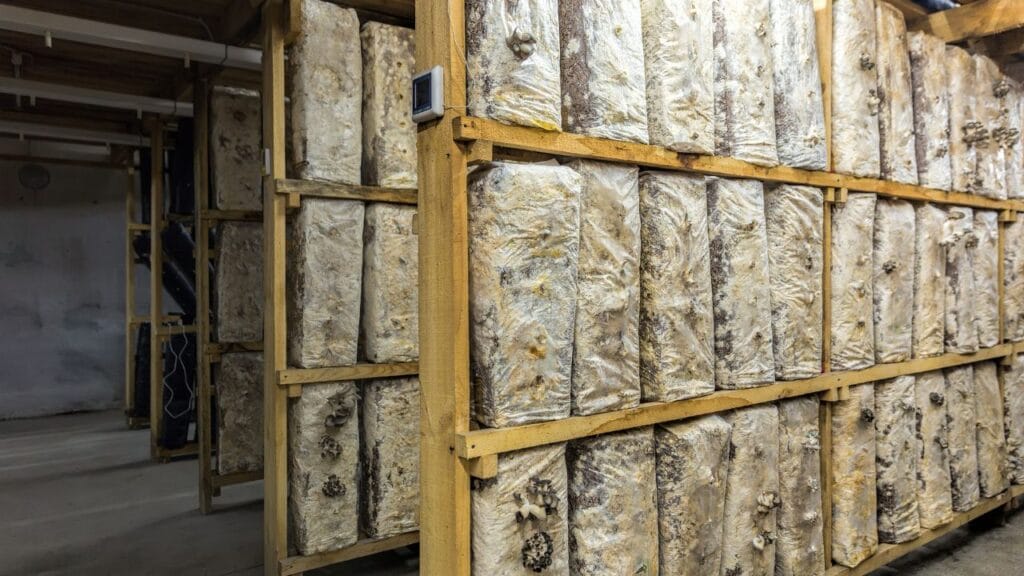
If you’re just getting started, it’s best to begin small by learning how to start mushroom farming at home and then scale gradually.
Conclusion
Controlled environment mushroom farming offers a modern, efficient, and scalable approach to growing mushrooms in India. By managing key factors like temperature, humidity, airflow, and hygiene, you can achieve consistent production, higher yields, and better-quality mushrooms throughout the year.
While the initial investment and technical setup may seem challenging, the long-term benefits—such as reduced risk, predictable output, and the ability to scale—make it a smart choice for serious growers and entrepreneurs. The key is to start with a manageable setup, learn the process, and improve with each cycle.
Whether your goal is to grow mushrooms at home or build a commercial farming business, controlled environment farming provides the structure and reliability needed for sustainable success.
👉 Start small, stay consistent, and scale smartly—that’s the path to profitable mushroom farming.
FAQs on Controlled Environment Mushroom Farming
What is controlled environment mushroom farming?
It is a method of growing mushrooms indoors by controlling temperature, humidity, airflow, and light for consistent production.
Is controlled environment mushroom farming profitable in India?
Yes, it can be highly profitable due to higher yield, year-round production, and better quality output.
What equipment is required for controlled mushroom farming?
Basic equipment includes humidifiers, thermometers, ventilation systems, racks, and temperature control units.
Can beginners start controlled environment mushroom farming?
Yes, beginners can start with a small setup and gradually scale as they gain experience.
Which mushroom is best for controlled environment farming?
Oyster mushrooms are best for beginners, while button and shiitake are suitable for advanced growers.

Leave a Reply